

Co-Directors


Peter Remien (Associate Professor of English, Lewis-Clark State College) is the author of The Concept of Nature in Early Modern English Literature (2019) and co-editor, with Scott Slovic, of Nature and Literature Studies (2022). His articles on environmental issues in early modern literature have been published in journals including PMLA, Spenser Studies, Modern Philology, and ISLE. He is currently working on a new project, provisionally titled “Bestial Liberty,” on animals, animality, and ideas of liberty in the seventeenth century. Email
Wallace Cleaves (Associate Dean and Director of the University Writing Program and Director of the California Center for Native Nations, University of California, Riverside) teaches and researches writing instruction and the relationships between medieval and Native American literature. He is a member of the Gabrieleno/Tongva Native American tribe, the indigenous peoples of the Los Angeles area, and is president of the Tongv aTraxat Paxaavxa Conservancy. Recent publications include the 13th edition of The St. Martin’s Guide to Writing, and “From Monmouth to Madoc to Māori: The Myth of Medieval Colonization and an Indigenous Alternative.” Email.
Advisory Council



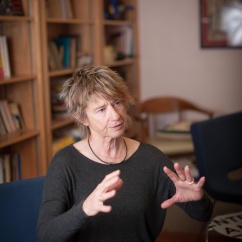


Sarah-Nelle Jackson (PhD Candidate, English Language and Literatures, University of British Columbia) explores the emergence of early notions of the “environment” in Middle English literary, legal, and historiographical discourse. She also enjoys playing and overthining neo-medieval video games and plans to incorporate critical game methods into her multimedia dissertation. Twitch | Email
Gretchen Minton (Professor of English and College of Letters and Science Distinguished Professor at Montana State University, Montana State University) has published extensively on Shakespeare and his contemporaries, including several critical editions of early modern plays. Her 2020 monograph, Shakespeare in Montana: Big Sky Country’s Lover Affair with the World’s Most Famous Author, is the winner of several regional book awards.
In addition to her scholarly work, Minton is a dramaturg, script adaptor, and director. She is the dramaturg for Montana Shakespeare in the Parks and the co-founder of Montana InSite Theatre, which is dedicated to site-specific performances that use classical texts to address current environmental issues. She has enjoyed the opportunity to speak to audiences and performing artists at Shakespeare’s Globe Theatre in London and the Oregon Shakespeare Festival in the US, as well as to audiences in Canada, the United Kingdom, Germany, Indonesia, and Australia.
In 2023 she was a Fulbright Scholar hosted by James Cook University in Townsville, Australia, where she wrote and staged an adaptation of Shakespeare’s Twelfth Night that is set in North Queensland and speaks to the intertwined human and ecological histories of this region. Email
Leila Kate Norako (Assistant Professor, English, University of Washington) specializes in late medieval literature and culture, and also contemporary medievalisms. She is a co-blogger at In the Medieval Middle, and PI of the digital project The Richard Coer de Lyon Multitext. When not teaching or writing, she can be found galavanting around PNW parks and beaches with her children and spouse or dancing traditional hula with Nā Lei ‘O Manu’akepa. Website | Email
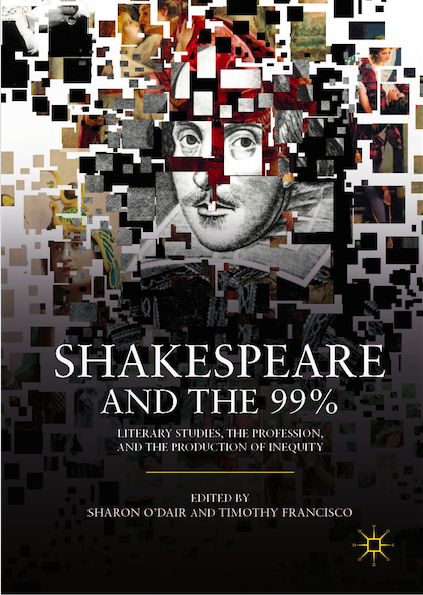
Sharon O’Dair (Professor Emerita, English, University of Alabama) currently lives in Berkeley, California and writes about Shakespeare, ecology, social class, and the profession of literary studies. Email
Kirsten Schuhmacher (PhD Candidate, English, University of California, Davis) studies early modern poetry & prose and rhetoric through an ecocritical lens. Most of the time, you can find her talking to her plants and learning about new trees. Email
Rob Watson (Distinguished Professor, English, UCLA) mainly teaches Shakespeare and 17th century poetry. His Back to Nature won the Dietz Prize, “awarded annually for the best book published in early modern studies,” and the ASLE Prize for the year’s best book of ecocriticism. His other books have studied Shakespeare, Jonson’s comedies, Renaissance mortality-anxiety, Throne of Blood, and the malfunctions of cultural evolution. His poetry has appeared in the New Yorker and dozens of other journals His ecocritical articles include “Renaissance selfhood and Shakespeare’s comedy of the commons,” “Tell Inconvenient Truths, but Tell Them Slant,” “Protestant Animals: Puritan Sects and English Animal-Protection Sentiment, 1550-1650,” and “Midsummer Night’s Dream and the Ecology of Human Being.” Email
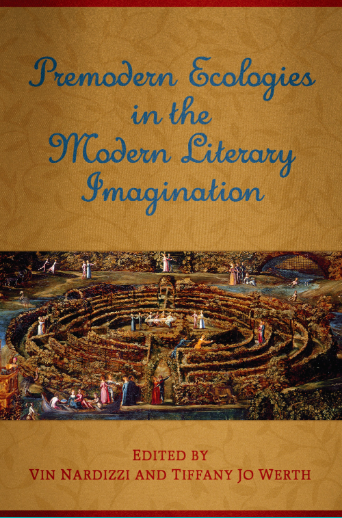
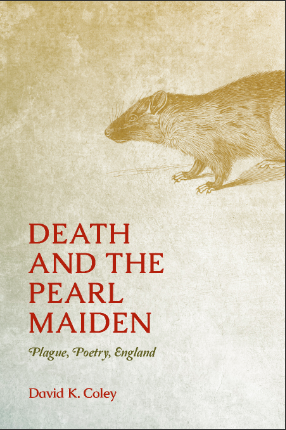
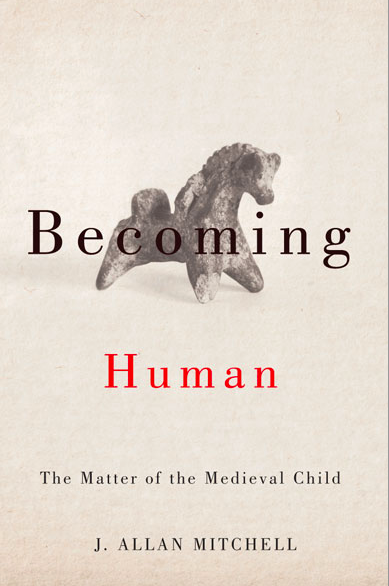
Members’ and Collaborators’ Bookshelf
If you have questions about our webpage or our programming, please contact Sarah-Nelle Jackson.
 Oecologies